IPv6 Proxies vs. IPv4 Proxies: Key Differences and Advantages
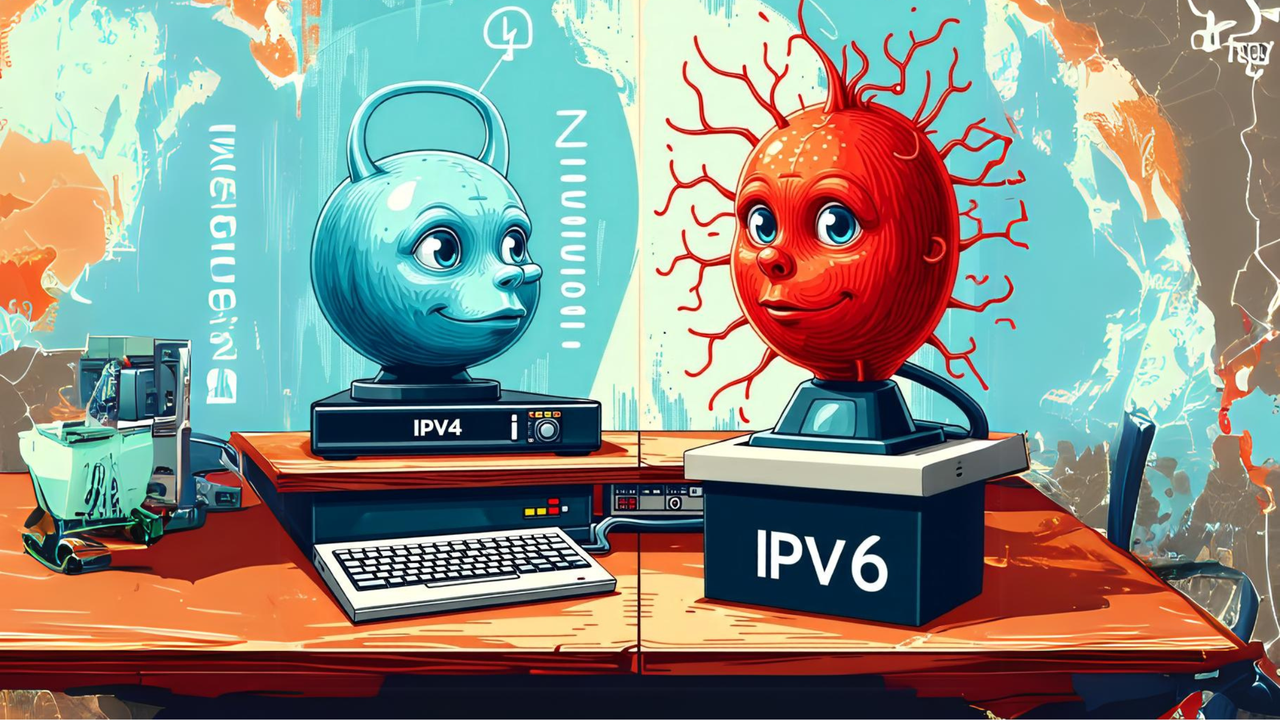
In practice, there are two significant types of IP addresses: IPv4 and IPv6. A good understanding of the differences between IPv4 and IPv6 proxies is essential to utilize them properly.
Proxies are a vital element in internet connectivity and online security. In essence, a proxy sits between a user and the internet, helping to hide the user, improving security and often access speeds.
In practice, there are two significant types of IP addresses: IPv4 and IPv6. A good understanding of the differences between IPv4 and IPv6 proxies is essential to utilize them properly. Furthermore, IPv6 proxies' advantages over the other are must-have information for businesses and individuals alike when setting out to enhance their online works.
Summarized: What is IPv4 Proxy
Here are the factors that are most important to know about IPv4 proxies;
Format: It is a 32-bit numerical label, expressed as four numbers separated by dots (Example: 192.168.0.1).
Availability: It has about 4.3-ish billion "unique" addresses. Due to the demand for internet-connected devices, IPv4 addresses are almost running out of IPs, as 4 billion is nothing compared to the growth of the internet.
Compatibility And Adoption: IPv4 has been adopted by a significant chunk of the world and has served as the addressing scheme for the internet since the 1980s. As a result, most devices, networks, etc., are compatible with it.
Summarized: What is IPv6 Proxy
Here are the must-know IPv6 proxy details;
Format: IPv6 addresses are 128-bit alphanumeric characters in the form of eight groups of four hex digits separated by a double colon (e.g., 2001:0db8:85a3:0000:0000:8a2e:0370:7334).
Availability: IPv6 can support unlimited unique addresses (approximately 340 undecillion), ensuring scalability for future internet growth.
Compatibility And Adoption: IPv6 has a vast address space and new features, so it is starting to be implemented in more and more organizations. However, it might be compatible with something other than old devices.
Key Differences Between IPv6 and IPv4 Proxies
Now that you know the fundamental differences between IPv6 and IPv4, let’s check out how they differ.
IP Address Space:
- IPv4 Proxies: A max of 100 available IP in a subnet + reusing IP address, which could cause getting blocked and get less anonymity.
- IPv6 Proxies: Largest address space as it can have a close to infinite number of unique IP addresses resisting IP bans while maintaining high Anonymity.
Performance:
- IPv4 Proxies: Because there are only a finite number of addresses, along with the requirement for Network Address Translation (NAT), there may be congestion, and performance could be slowed.
- IPv6 Proxies: IPv6 Proxies serves to direct routing and does not require NAT, improving the data transfer and speeding up.
Security:
- IPv4 Proxies: Limited security features with the need sometimes for added configurations to address exhaustion issues.
- IPv6 Proxies: These proxies are developed with security in mind, including support for IPsec. If you are wondering what IPsec is, it is a secure protocol suite for IP transmissions that works by certifying and encrypting each IP packet of a session.
Compatibility:
- IPv4 Proxies: Great compatibility with most existing sites, apps, and devices.
- IPv6 Proxies: While IPv6 proxies are becoming more compatible with all modern technology, some less modern systems and websites don’t support IPv6 fully.
Cost:
- IPv4 Proxies: Costly in the long run due to lack of IPv4 addresses.
- IPv6 proxies: Since there is huge amount of IPv6 addresses available, it enables them to be relatively more cost-effective.
Advantages of IPv6 Proxies
Now that you know the critical differences between the two proxies, let’s check out how IPv6 proxies have advantages over IPv4 proxies.
Enhanced Scalability
IPv6 has a much larger address area than IPv4, so there are no more limitations. This scalability is vital as the internet grows since IPv4 can only support 4.3 billion IP addresses.
Improved Anonymity
IPv6 proxies can cycle through IP addresses better than IPv4, helping with anonymity and reducing the chance of being banned through IP from services like websites scraping or being geo-blocked.
Excellent Future
As the web evolves towards IPv6, using IPv6 proxies guarantees excellent compatibility with future technologies and services. The promise is that early adopters can enjoy the benefits of IPv6 without being left in the lurch by the obsolescence of IPv4.
Superior performance and reliability
In IPv6, it is minimized to direct routing to decrease the latency and save the data transmission rate. This leads to much faster and more reliable networks, a significant gain for high bandwidth/low latency applications.
Why Choose FlashProxy For Your IPv6 Proxies
There are numerous proxy service providers out there who are willing to provide you with IPv6 proxies. Let’s check out what makes our proxies unique and why you should choose us.
Extensive IPv6 Address Pool
FlashProxy has a large pool of IPv6 addresses, including IPv6 residential proxies, so you will never run out of IPs. This wide variety of IP addresses ensures IP bans are minimized and offers higher anonymity, making it great for web scraping, SEO monitoring, and bypassing geolocation restrictions.
Better Performance & Speed
FlashProxy’s infrastructure is fine-tuned for IPv6 and, therefore, provides a better performance and speed. The high speed proxy servers of FlashProxy, together with the direct routing capabilities of IPv6, ensure minimal latency and fast data transfer. This makes FlashProxy a good option for bandwidth-intense and latency-sensitive.
Perfectly Integrated and Compatible
FlashProxy integrates perfectly with your systems. It is configured for perfect compatibility with every application, every software, and every device for which the IPv6 proxy is designed. Overall, FlashProxy makes your transition from IPv4 or fresh IPv6 deployment easy.
Dedicated Customer Support
Customer satisfaction is the number 1 focus for FlashProxy. We provide customer support for any issues or questions you have about your IPv6 proxies configurations. One of the best things about us is that our expert customer service is available day and night 24/7, so you know you will get help and support when needed.
Robust Network Reliability
FlashProxy stands to be a robust and reliable network. With our data centers and redundant systems, the uptime and availability are very good. FlashProxy provides super-relatable proxies for you to count on when using the internet, never frustrating your online experiences.