Residential Proxy Vs ISP Proxy: Which One Is Best For You
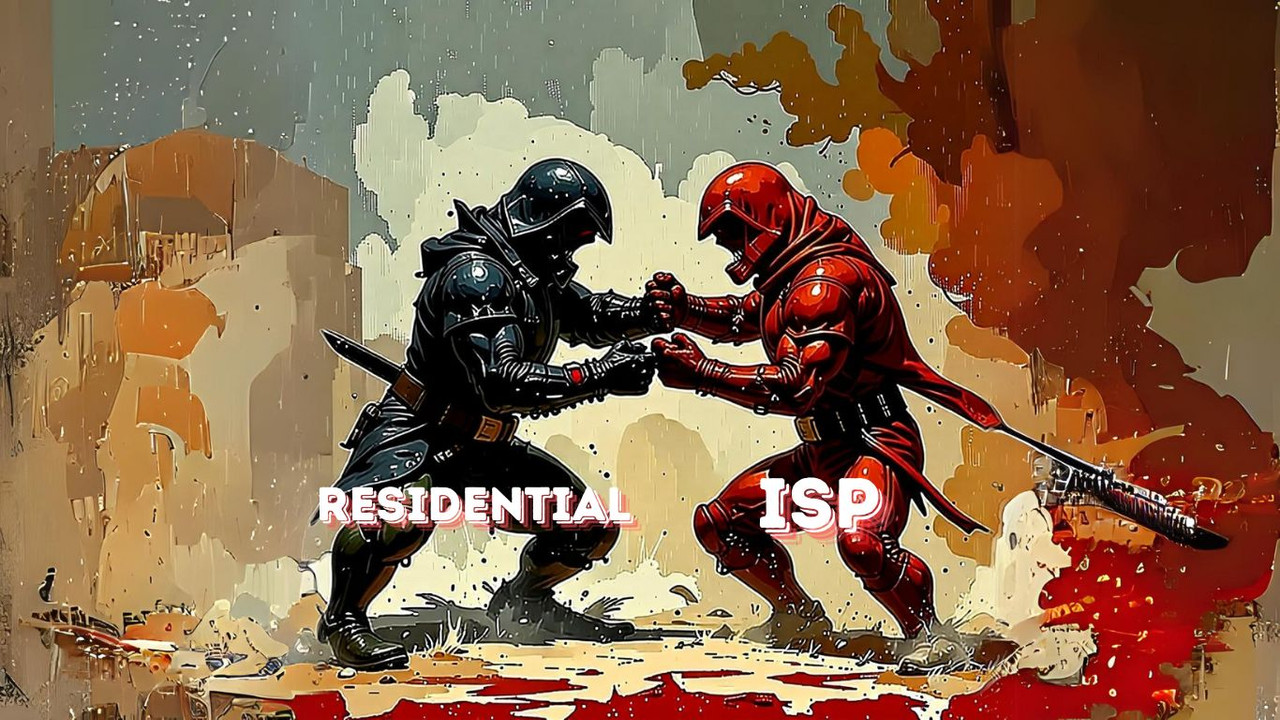
When it comes to proxies, Residential and ISP proxies are the ones you will come across the most. However, what's the difference between them and which one should you choose has always been a confusing realm.
In the realm of online privacy and data collection, proxy servers are essential. This space mostly contains residential proxies and ISP Proxies. Understanding the distinctions and when to use one over another, along with their respective advantages and disadvantages, can help you decide what is more appropriate for your situation.
In this article, you will learn everything about residential vs. ISP proxy. So if you are confused about choosing between them, this article will clear up everything. We'll select each factor and declare a winner so you can better connect your pick and your aims with these proxies' features. Let’s start with the basics!
What Are Residential Proxies?
Unlike datacenter proxies, residential proxies use the IP addresses assigned by Internet Service Providers (ISPs) to homeowners. Both of these are real residential addresses, so they present as actual internet users at home going about their business.
An excellent advantage of residential proxies is that they are much more authentic. Since these proxies use real residential IPs, it would appear that completely legal users were browsing their pages on the websites. Hence, the risk of being blocked is significantly reduced.
This is why residential proxies are so effective for anything that demands high anonymity and credibility. Yet the price for this authenticity is high. Your typical residential proxy will cost much more than most other types of proxies as they are real and limited.
However, they are also typically slower than data centers or ISP proxies as they operate on residential internet connections.
What Are ISP Proxies?
ISP proxies - which are sometimes known as static residential proxies because they spoof their IP address from a genuine Internet Service Provider to offer both fast and authentic lists. So, they are data center-hosted IP addresses rather than the ones local ISPs assign you.
By proving to be the fastest, this feature stands consistent amongst all ISP proxies. Furthermore, they are faster than residential proxies simply because they work on powerful data center infrastructure. As a result, they are very good for low latency and high-speed use cases.
ISP proxies are also incredibly stable, meaning that for large-scale projects such as web scraping or unblocking geo-blocked content, this is exactly the sort of proxy you need!
Although they are usually cheaper than residential proxies, ISP proxies still expose you to a higher level of detection (but this is much lower compared with the danger that data center ones pose).
Factors To Consider Before Choosing Between Residential Proxy Vs ISP Proxy
Let’s check out the factors that you should consider before choosing a proxy server.
Cost
In terms of the pricing for proxies, residential ones generally fall into a higher-cost category. This is mainly because they are real IP addresses that are in short supply. With the demand for these genuine proxies comes a price, making it pricier.
By contrast, ISP proxies are usually much cheaper. Hence, ISP proxies are a pocket-friendly way for users looking for top-notch and budget proxies.
Reliability
In Proxies, reliability is a key consideration. This is where residential proxies shine with their higher levels of legitimate integrity. Websites consider them as real customers, which drastically lowers the chances of being caught and blacklisted. Thus, they are best suited for applications that require strong anonymity, like accessing country-restricted services and ad verification.
On the other hand, ISP proxies provide much stability but carry a bit more risk of detection than residential ones. However, they are ideal for high throughput operations that web scraping and social media management entail because of their stable performance profile.
Speed
One of the important things in proxy is its speed. Residential proxies will use people's IP addresses from homeowners. They are generally slower than data centers as they rely on consumer Internet connection speeds. This makes it less well-suited for high-speed things.
However, we also said that ISP proxies are very fast. Therefore, they are quicker and have less lag when compared to residential proxies. This makes ISP proxies perfect for faster and more efficient jobs such as SEO monitoring, sneaker copping, or accessing geo-block content.
Which One Should You Pick?
Each of the several proxy types that have been described has a specific use case. Residential proxies are suitable for anonymizing and authenticating high-quality results. Furthermore, they are perfect for accessing blocked content, unblocking geo-blocks, and verifying ads.
On the flip side, ISP proxies are perfect for anything that needs speed and consistency. It is ideal for large-scale web scraping, social media management, and SEO monitoring. Due to their speed and high repeatability, they are suitable for jobs requiring fast-paced efficiency.
Conclusion
We suggest going with either residential proxies or ISP proxies based on your requirements. The authenticity and also the lesser probability of getting blocked are what make residential proxies ideal. However, for projects that require rapidity and clean performance, ISP proxies come in better. Reflecting on your cost, speed, and reliability needs will help you choose the best proxy solution.